
Event Description
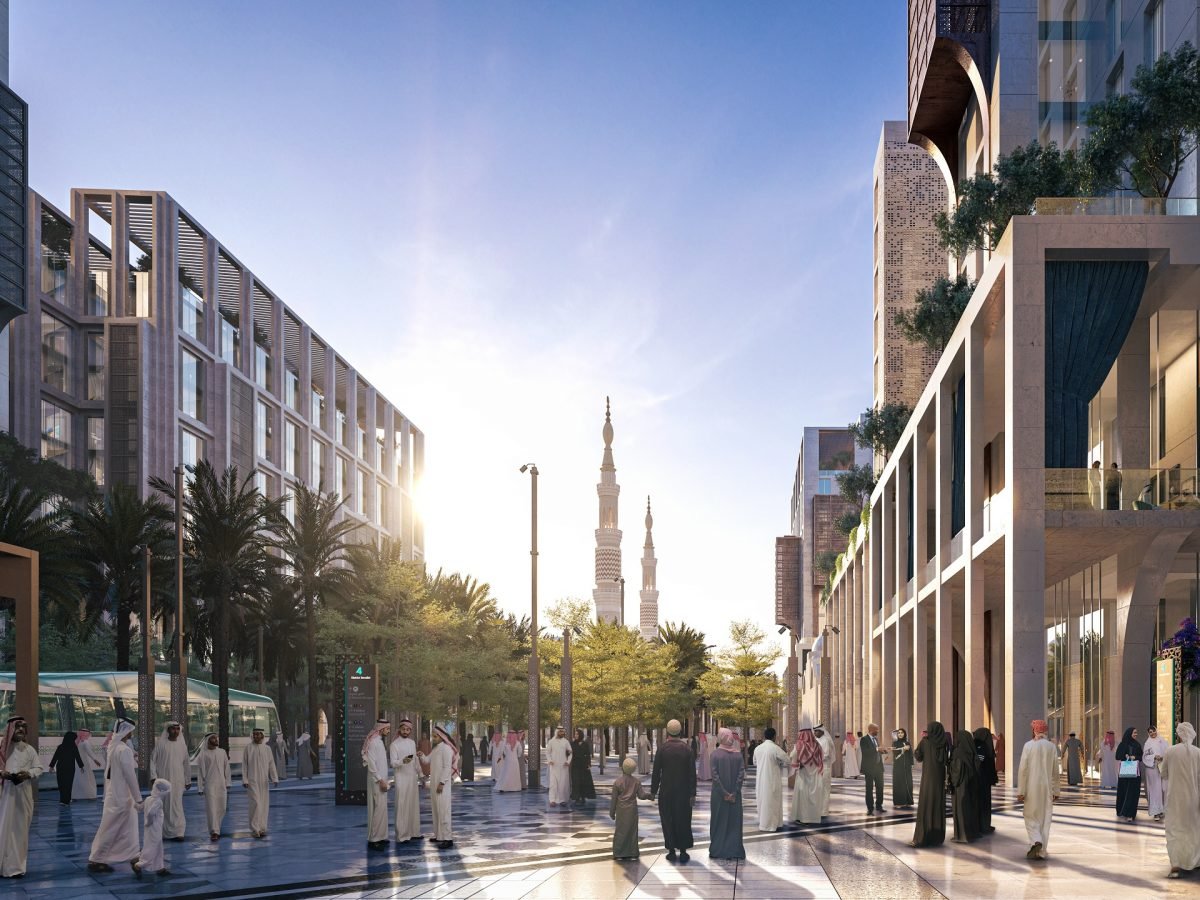
In regions facing extreme heat and growing environmental pressures, architects are increasingly challenged to create buildings that are not only efficient, but also culturally grounded and humane. This lecture presents the Madinah Marriott Hotel as a case study demonstrating how passive design strategies can be effectively integrated into contemporary hospitality architecture in a hot-arid climate.
Located in Madinah, the project responds to intense solar exposure, high cooling demand, and the unique spatial and operational requirements of religious tourism. Rather than relying solely on mechanical systems, the design integrates passive strategies from the earliest stages—including building orientation, massing optimization, shading devices, envelope performance, and controlled daylighting—to reduce energy demand while enhancing guest comfort and spatial quality.
The lecture focuses on implementation, showing how climate research and sustainability principles were translated into real design decisions within the constraints of brand standards, authority regulations, and fast-track project delivery. Digital tools such as climate analysis, solar studies, and performance simulations played a critical role in evaluating options and supporting measurable outcomes.
Beyond environmental performance, the project demonstrates how passive design can support place-making and cultural responsiveness. Spatial transitions, shaded outdoor zones, and carefully calibrated daylighting contribute to a guest experience that is both context-sensitive and operationally efficient.
By connecting climate intelligence, cultural understanding, and architectural practice, this session reframes passive design as a practical, scalable approach for shaping resilient, high-performing places. The lessons from the Madinah Marriott project offer valuable insights for architects working in hospitality and other building types across the Middle East and similar climates worldwide.
CES: Estimated 1 LU/HSW for AIA Members
Speaker
Li Ren, AIA, Past President, AIA Middle East; Associate, Perkins Eastman
Moderator
Megha Arjun, Intl. Assoc. AIA; Chapter Representative, AIA Middle East
Speaker Bio

Li Ren is an Architect and Associate at Perkins Eastman in Dubai, where he specializes in the design of hospitality, senior living, and master plans. His approach to design is sustainable and inclusive, seeking to involve the community in the design process to enhance both the quality of the design and social engagement. Li is passionate about community-focused design and urban renewal, and his research and practice are centered around these themes, with a particular focus on the areas of technology, sustainability, and culture. He has been recognized for his contributions to the field, including the AIA|DC Emerging Architect Award in 2021 and BD+C’s 40 Under 40 Awards in 2022.
In active involvement with the American Institute of Architects (AIA), Li has served as the chair of the 2024 AIA Global Practice Committee and the 2025 President of the AIA Middle East Chapter. In the realm of academia, Li has made contributions as a visiting lecturer at both Virginia Tech (WAAC) and the American University in the Emirates.

Moderator Bio
Megha Arjun is a licensed Architect with COA in India, currently working in Qatar in the field of architecture, design, and construction. Her passion for Architecture originated from her love and understanding of Life. Learning and exploring the world of Architecture, One's idea is to take Inspiration from Life itself and give it back in the Physical form. One believes in creating spaces which can contribute to the World in a way which helps create value in people's lives and in the environment.
Megha has worked for a global design firm - HKS Inc. where she has worked on different scales of projects in the US, China and India. She has been actively involved in preparing and participating in Client presentations for reputed Clients in India and Singapore. Currently, to advance her knowledge in Building construction, she has been leading the construction and coordination effort as a Project Manager with PES in Qatar for various upcoming projects in Qatar.
Megha is a member of the AIA American Institute of Architects as an International Associate. She has been awarded a Gold Medal in her Bachelors for Academic Achievement. She has also been a Better Together Champion for the firm-wide initiative in HKS Inc. as a part of HR to include Diversity, inclusion, and Equity.