Architecture Beyond Borders: Responsibility, Culture, and the Future of Our Profession
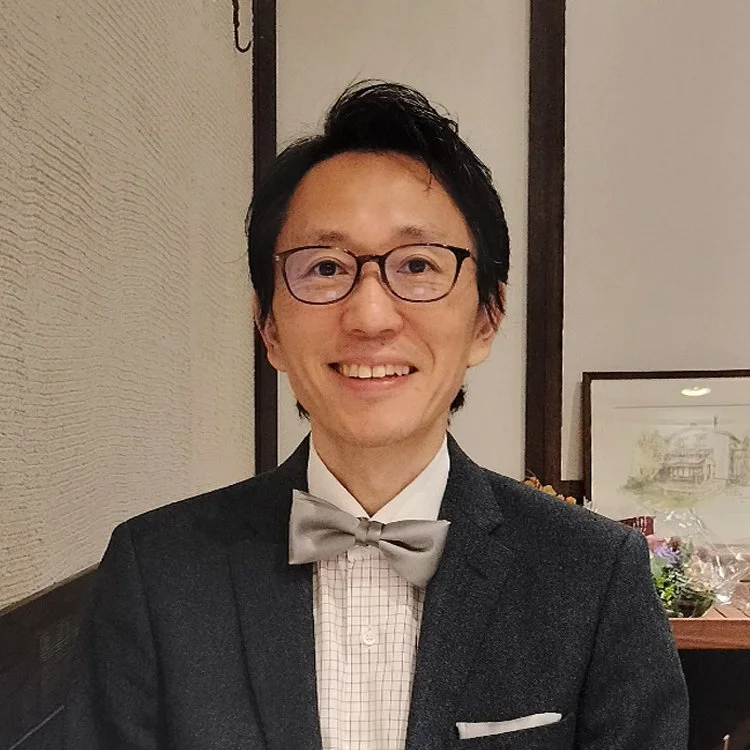
January 1 marks the official beginning of my term as President of AIA International.
As we enter a new year together, it is an important moment to reflect on the state of our profession and the responsibilities we share globally.
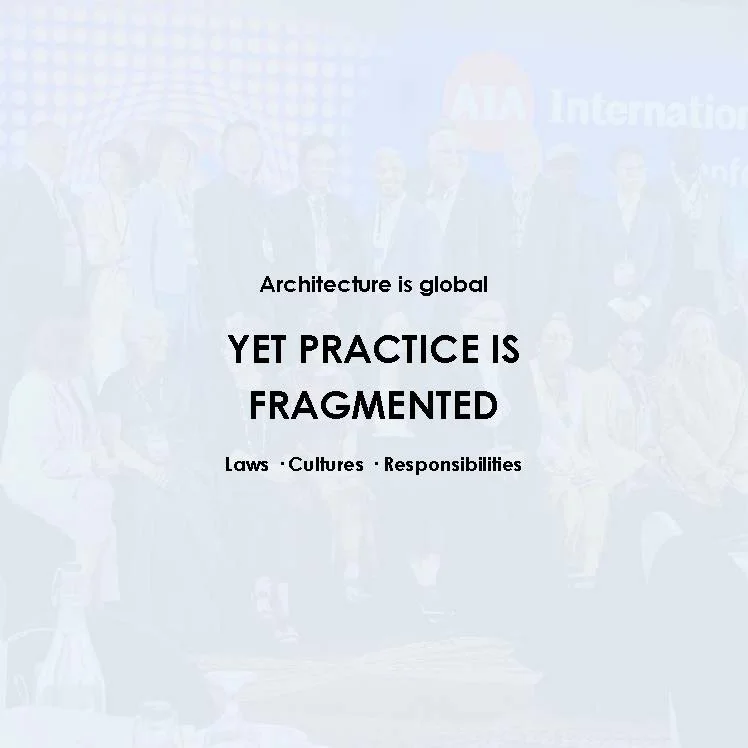
Architecture matters most in times of uncertainty. Today, cities are evolving at unprecedented speed. Technology is advancing faster than our regulatory frameworks, while climate conditions are becoming increasingly extreme. At the same time, architectural practice is more global than ever, yet also more fragmented.
Across regions and cultures, architects work within very different legal systems, traditions, and professional expectations. In some places, architects are viewed primarily as authors. In others, as engineers, coordinators, or collaborators serving the public good. These differences are not problems to be corrected, they are shaped by history, law, social responsibility, and cultural values.
AIA International does not exist to impose a single model of practice. Our role is to strengthen mutual understanding across cultures, because global practice depends on clarity, trust, and respect.
As architecture becomes increasingly international, communication becomes essential. Terms such as architect, designer, author, lead, or local partner do not carry the same meaning everywhere. When definitions are unclear, responsibility becomes fragmented, and when responsibility is fragmented, professional judgment is weakened.
Architecture is not defined by images, software, or speed. It is defined by responsible decision-making and professional judgment. When authorship is separated from responsibility, the profession weakens. When accountability is unclear, architecture risks becoming a collection of services rather than a profession entrusted by society.
Climate change is one of the most serious challenges we face, not as an abstract concept, but as lived reality. Its impacts vary widely by region, from rising sea levels and extreme heat to flooding, water scarcity, and displacement. There is no single solution. Responding effectively requires what defines architecture as a profession: local knowledge, cultural understanding, long-term thinking, and responsible judgment. Sustainability is not an optional specialization, it is a professional obligation shaped by place and context.
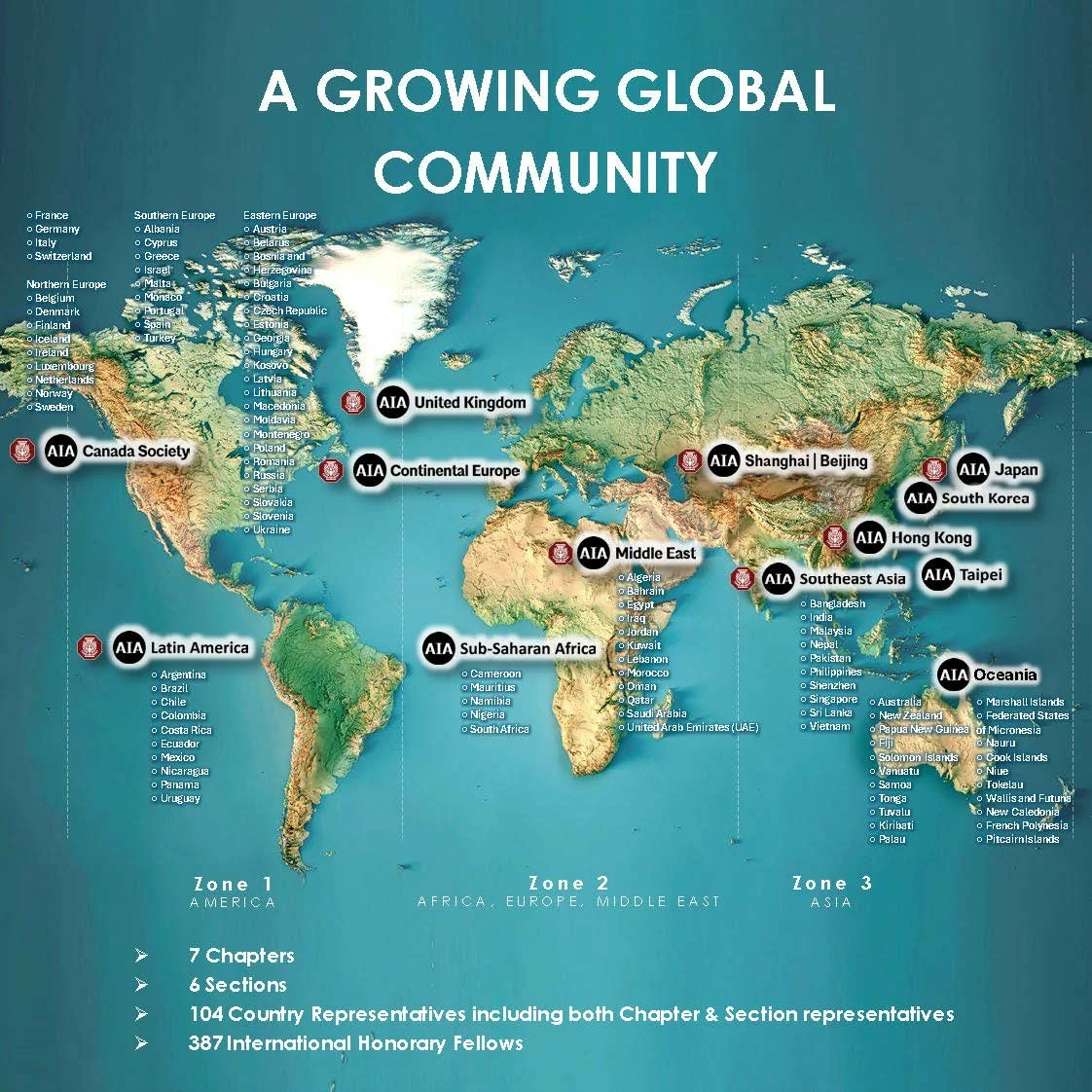
Collaboration with professional organizations around the world is essential to advancing architecture responsibly. In the coming year, AIA International will continue to strengthen partnerships across Asia, Europe, the Americas, Africa, the Middle East, Oceania, and emerging markets. Through knowledge sharing, professional exchange, and alignment on ethical standards, we can ensure that global insight supports, rather than overrides, local culture and practice.
Protecting the architectural profession does not mean resisting change. New technologies, including artificial intelligence, will continue to transform how we work. However, technology cannot replace accountability, judgment, or ethics. Its role must be to support professional responsibility, not replace it.
As I begin this term, AIA International will continue to stand for clear principles: transparency over mythology, responsibility over visibility, collaboration over competition, and training and mentorship over short-term efficiency.
Architecture has always served as a bridge between cultures, disciplines, ideas, and realities. Today, it must go further. Architecture must not only connect thinking across borders, but become part of the thinking itself: questioning, judging, and taking responsibility for the future it helps shape.
I look forward to working together across regions and cultures to ensure that architecture remains relevant, responsible, and trusted for generations to come. I wish you all a thoughtful and successful New Year.
Segene Park, AIA
President, AIA International