
Event Description
A 14-year war in Syria has left behind one of the most severe urban destruction crises of the 21st century. More than 130,000 buildings have been damaged or destroyed, generating an estimated 38.5 million tons of concrete rubble, material that once formed the physical fabric of homes, neighborhoods, and communities. At the same time, over 7 million internally displaced persons remain without permanent housing, and approximately 80% of displaced families report that their homes are either destroyed or severely damaged. Years after the cessation of major hostilities, thousands of returning families continue to face an acute shortage of safe, affordable housing and basic infrastructure.
Post-war reconstruction in such contexts is not only a technical challenge but also an environmental and financial burden. Conventional demolition, transport, and landfill disposal of debris would generate significant CO₂ emissions and impose high material and logistics costs on an already fragile economy. Meanwhile, rebuilding with virgin aggregates intensifies quarry extraction and increases embodied carbon. These realities demand reconstruction models that are rapid, resource-efficient, and environmentally responsible.
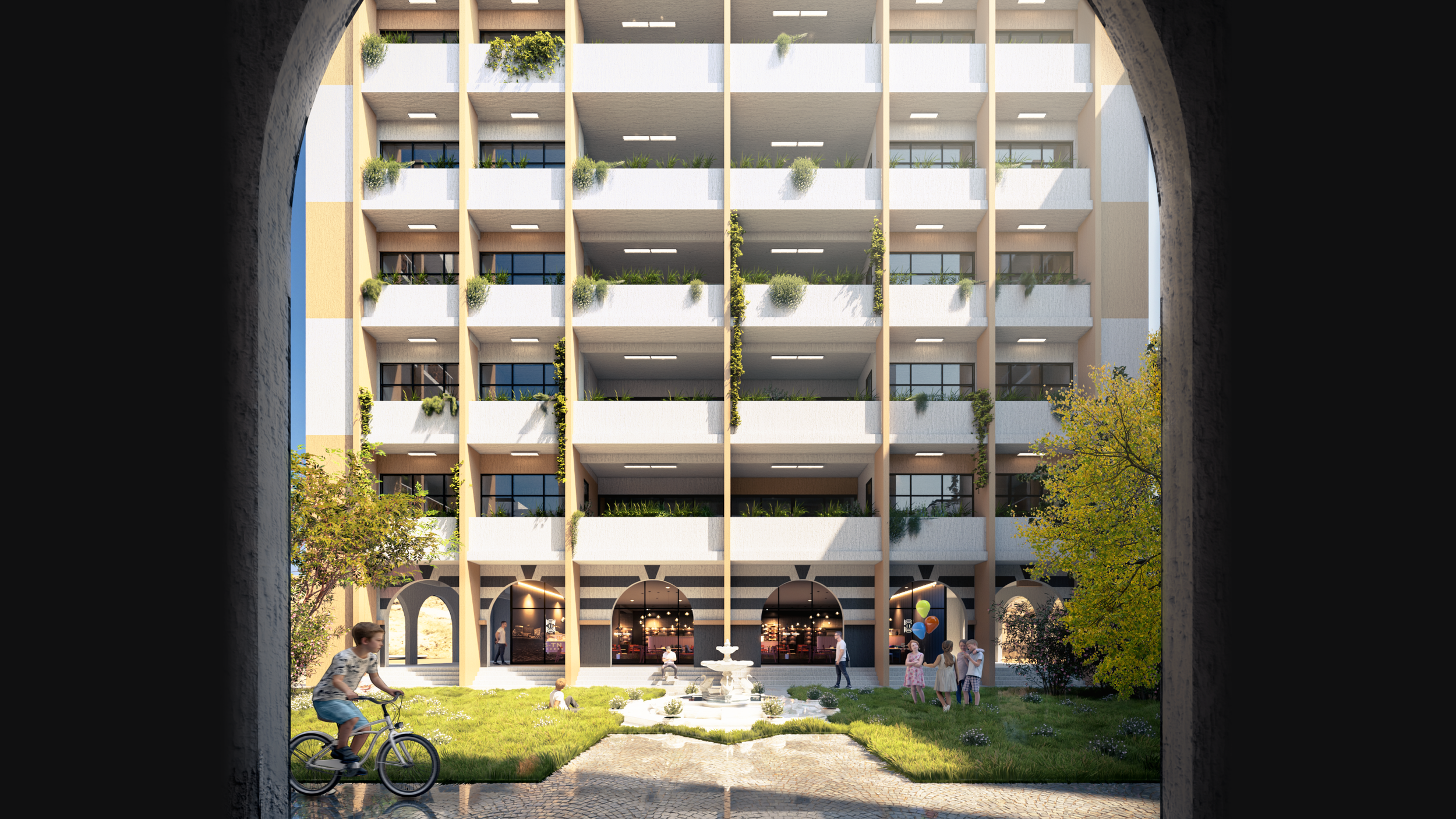
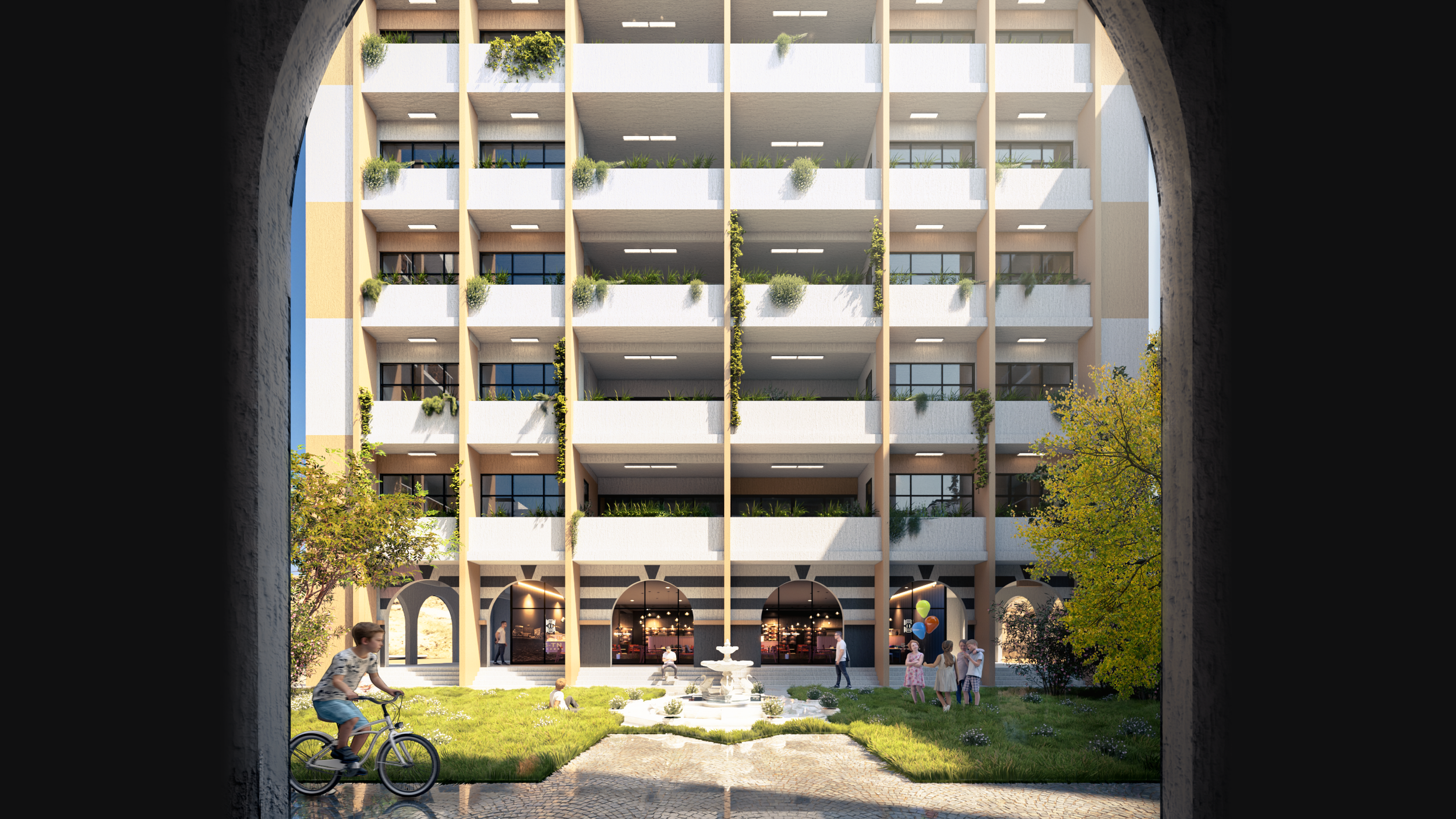
NUHUD responds to this crisis through a circular reconstruction strategy that transforms war-generated debris into a structural and architectural resource. By recycling rubble into Recycled Concrete Aggregate (RCA), the project proposes modular mid-rise residential buildings organized into a scalable neighborhood prototype. Jobar, Damascus, one of the most heavily damaged districts, serves as the pilot site, with the model designed for replication in cities such as Aleppo and Homs.
Structural validation using TEKLA confirms the compresive strength of up to 100% RCA concrete, meeting regional building code requirements. The system integrates modular precast construction and on-site recycling to reduce transportation demand and construction time. Additionally, instablity of infrastructure and energy sources are highly considred through orientation, space management and renewable energy, all helping with social, economial , and environemntal factors.
By combining circular material reuse, structural feasibility, energy efficiency, and cost optimization, NUHUD proposes a practical and scalable framework for post-war reconstruction, where rubble becomes infrastructure and rebuilding becomes regeneration.
CES: Estimated 1 LU/HSW for AIA Members
Speakers
Ahmad Alawadhi, United Arab Emirates University
Ahmad Alchikh, Assoc. AIA, United Arab Emirates University
Ahmad Almadhaani, United Arab Emirates University
Osama Alnasmeh, United Arab Emirates University
Abdullah Taher, United Arab Emirates University
Moderator
Sherif W Anis, FAIA, NCARB, RIBA; Senior Development Director, King Abdullah Financial District Development & Management Company (KAFD DMC); Executive Director, Past President & Co-Founder, AIA Middle East
Speakers Bios
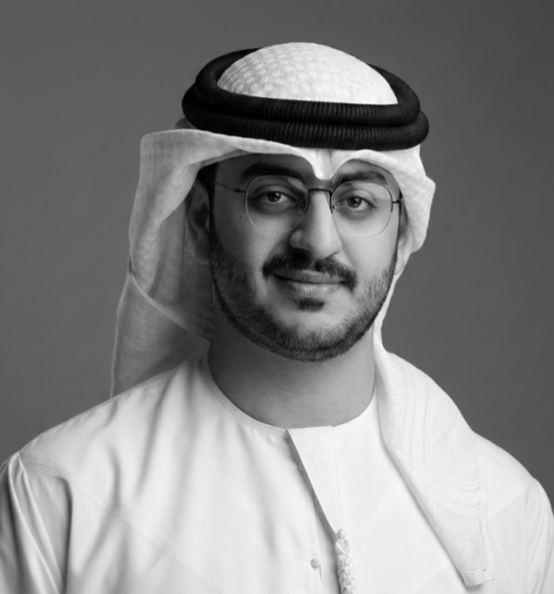
Ahmed Alawadhi is a final-year Architecture Engineering student at the United Arab Emirates University (UAEU), with an expected graduation in August 2026. His academic focus centers on sustainable architecture, structural design, and Building Information Modeling (BIM), with a strong interest in developing environmentally responsive designs that integrate innovation and emerging technologies.
Throughout his studies, Ahmed has demonstrated a commitment to research-driven and context-sensitive design. He contributed to the conceptual development of the Birds of UAE Sanctuary and Research & Development Center, a project that explored the integration of artificial intelligence, local environmental conditions, and architectural heritage through a case study of the Abu Dhabi Mangroves. This experience strengthened his analytical thinking, technical expertise, and ability to approach architectural challenges from both environmental and structural perspectives.
In addition to his academic work, Ahmed serves as President of the Catalysts Engineering Club at UAEU, where he leads a team of approximately 70 members. In this role, he oversees the organization of workshops, guest lectures, and professional development initiatives within the Engineering Department. With over 250 hours of volunteer service across more than 30 events, he exemplifies leadership, collaboration, and a strong commitment to community engagement.

Ahmad Alchikh is a senior Architectural Engieering student at UAEU. His journey in Architecture explores the balance between the visual and aesthetic aspects of architecture and its technical engineering dimension, as well as between theoretical research and practical fieldwork.
He has a particular interest in architectural competitions, which he sees as opportunities for emerging innovative architects to challenge conventions and propose ideas beyond of what’s familiar.
Ahmad is also engaged in academic research exploring innovative and sustainable materials and methods, including the structural and thermal performance of Geopolymer Concrete and the characteristics of Recycled Concrete Aggregates (RCA), alongside interests in parametric architecture and Building Information Modeling (BIM).
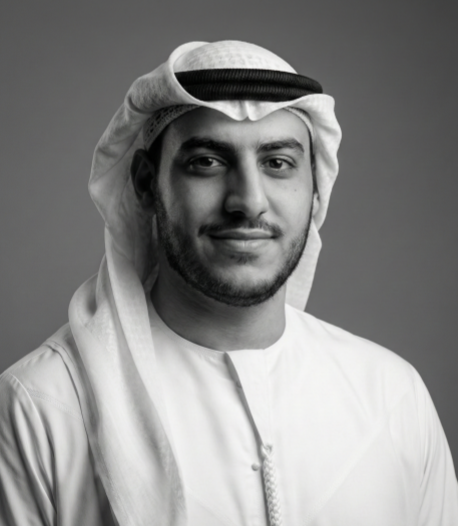
Ahmed Ali Almadhaani is a fifth-year Architectural Engineering student at the United Arab Emirates University (UAEU) with a strong focus on sustainable architecture, circular design systems, and climate-responsive innovation. His academic work bridges research, technology, and socially driven design to address environmental and urban challenges across the GCC and beyond.
Ahmed received First Place Award in the international Re-Construct: Designing with Waste 2025 competition, where his team’s project, NUHUD – From Rubble to Renewal, proposed a structurally verified circular housing system that transforms war debris into low-carbon residential communities. The project was internationally recognized for its innovation, feasibility, and sustainability. He also secured First Place in the GCC Housing Hackathon, leading the ERTH team in developing an integrated urban proposal that combined environmental analysis, community research, and sustainable planning strategies to address regional housing challenges.
In addition to these achievements, Ahmed contributed to the SURE+ Undergraduate Research Program at UAEU, working on the development and testing of ultra-light, energy-efficient geopolymer concrete cladding panels designed for hot climates. His work aims to reduce carbon emissions and improve building thermal performance. His portfolio reflects a strong interest in culturally responsive architecture, including mosque design competitions and earthen architecture initiatives aligned with Terra 2026. Combining BIM expertise, structural analysis, and research-driven thinking, Ahmed aspires to shape resilient, low-impact, and future-ready built environments.
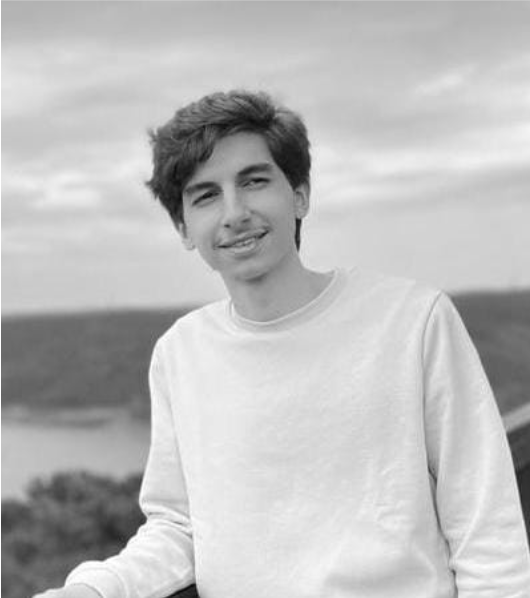
Osama Alnasmeh is an undergraduate Architectural Engineering student with a growing focus on transit-oriented urban planning and the integration of traditional architectural principles into contemporary design. His academic interests explore how cities can evolve sustainably while remaining culturally grounded and socially responsive.
Osama has actively participated in design research and competitions that explore innovation in architectural practice. He took part in the Smart Mosque Competition, investigating the intersection of technology, sustainability, and community-focused religious spaces. He has also presented at the ZEMCH Conference (Zero Energy Mass Custom Home), contributing to discussions on sustainable housing and environmentally responsive construction strategies.
His graduation project proposes a residential neighborhood in Syria built using recycled rubble from destroyed buildings, transforming the remnants of conflict into a resource for reconstruction and renewal. Through this work, he explores architecture as a tool for resilience, environmental responsibility, and community rebuilding, while also examining how transit-oriented development can improve urban livability and connectivity.
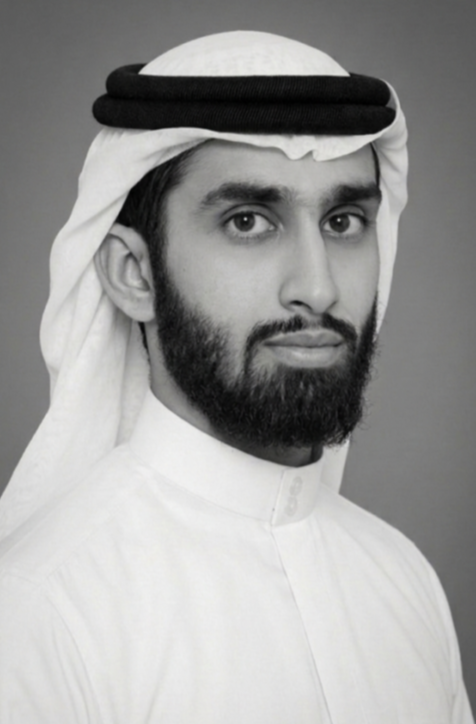
Abdulla Taher is an undergraduate Architectural Engineering student with a strong focus on architectural planning, structural integration, and construction detailing. He is particularly interested in designing buildings inspired by traditional architecture, cultural heritage, and symbolic meanings, while integrating structural planning and engineering calculations to ensure safety and buildability.
Abdulla works at the intersection of architectural design and structural systems, producing coordinated construction drawings that translate design concepts into practical and executable solutions. His work reflects a commitment to balancing architectural creativity with structural efficiency.
He has experience with architectural and structural design software, including Revit, as well as structural analysis programs such as Tekla Structures and STAAD for modelling, analysis, and verification of structural systems.
Abdulla also participated in a bus shelter design competition, where he contributed to the initial conceptual design while considering both contextual inspiration and structural feasibility. In his graduation project, he contributes to the structural development of a reconstruction proposal in Syria that focuses on recycling war-damaged rubble to support sustainable rebuilding strategies.
Moderator Bio
Sherif Anis is an architect and development management leader with more than three decades of experience across the United States, the United Kingdom, and the GCC. Since 2007, he has played a key role in major development programs in the UAE and Saudi Arabia, with a particular focus on complex, high-value projects that demand strong design leadership, technical coordination, and strategic delivery oversight.
With deep expertise in design management, urban development, and multidisciplinary coordination, Sherif has led and contributed to a wide range of project types including mixed-use developments, commercial and residential towers, corporate headquarters, hospitality projects, university campuses, major educational facilities, and contemporary residences. His work is grounded in the belief that successful projects must be not only innovative and design-led, but also buildable, cost-effective, sustainable, and highly livable.
An award-winning and published designer, Sherif is a frequent speaker, panelist, moderator, and juror at regional conferences and design award programs. He was ranked No. 68 among the Power 100 most influential people in the GCC construction industry and is a Fellow of the American Institute of Architects. A founding member of the AIA Middle East Board, he currently serves as the chapter’s Executive Director, having previously served as Treasurer, Secretary, Vice President, and President. At the international level, he served on the founding board of AIA International as Zone 1 Director and later as Secretary, and currently serves as the College of Fellows Representative.
Sherif holds a Bachelor of Architecture from the Syracuse University School of Architecture and is a licensed architect in the Commonwealth of Massachusetts.