
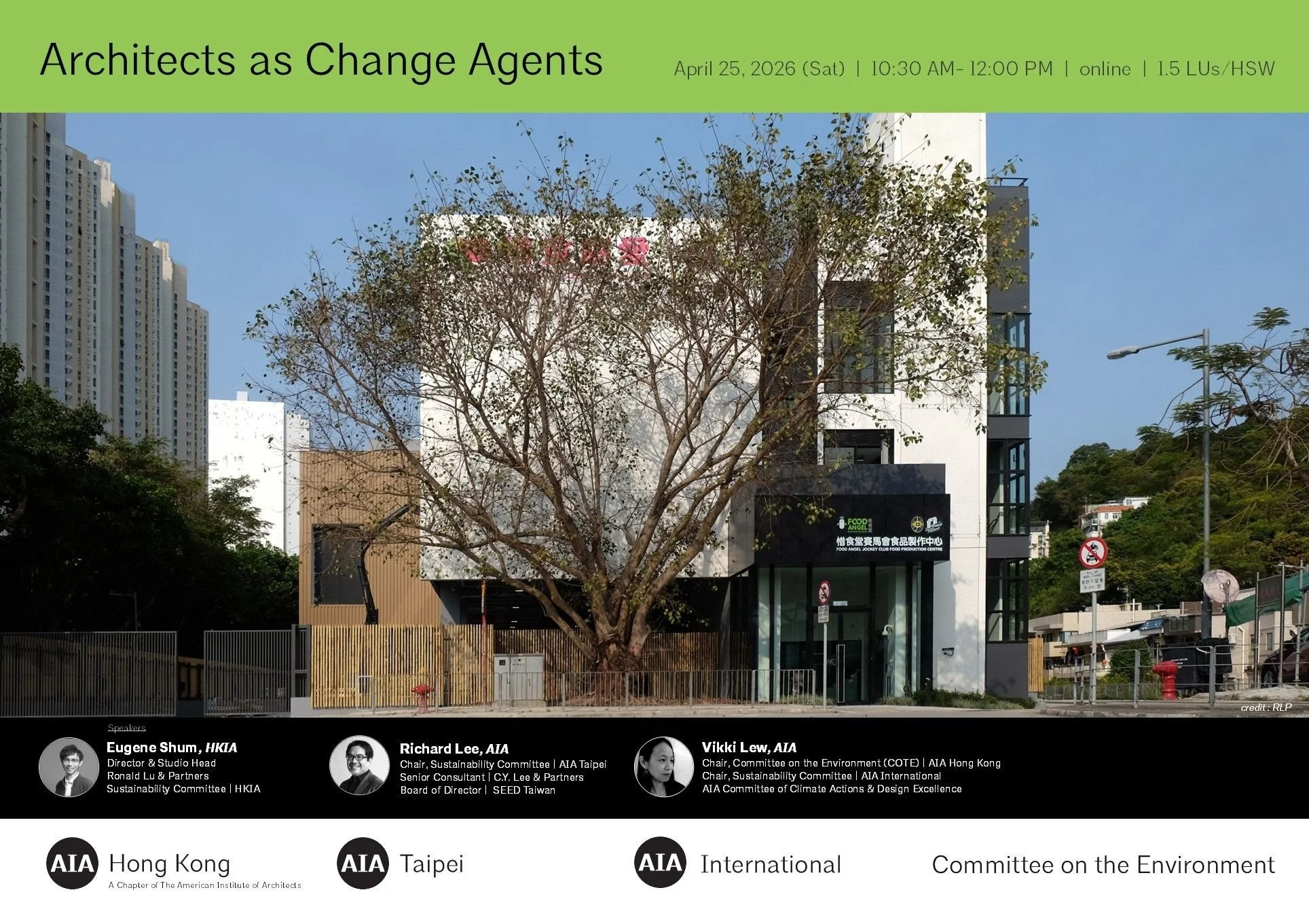
AIA Hong Kong & AIA Taipei - Architects as Change Agents - Designing for Climate, Equity, and Impact
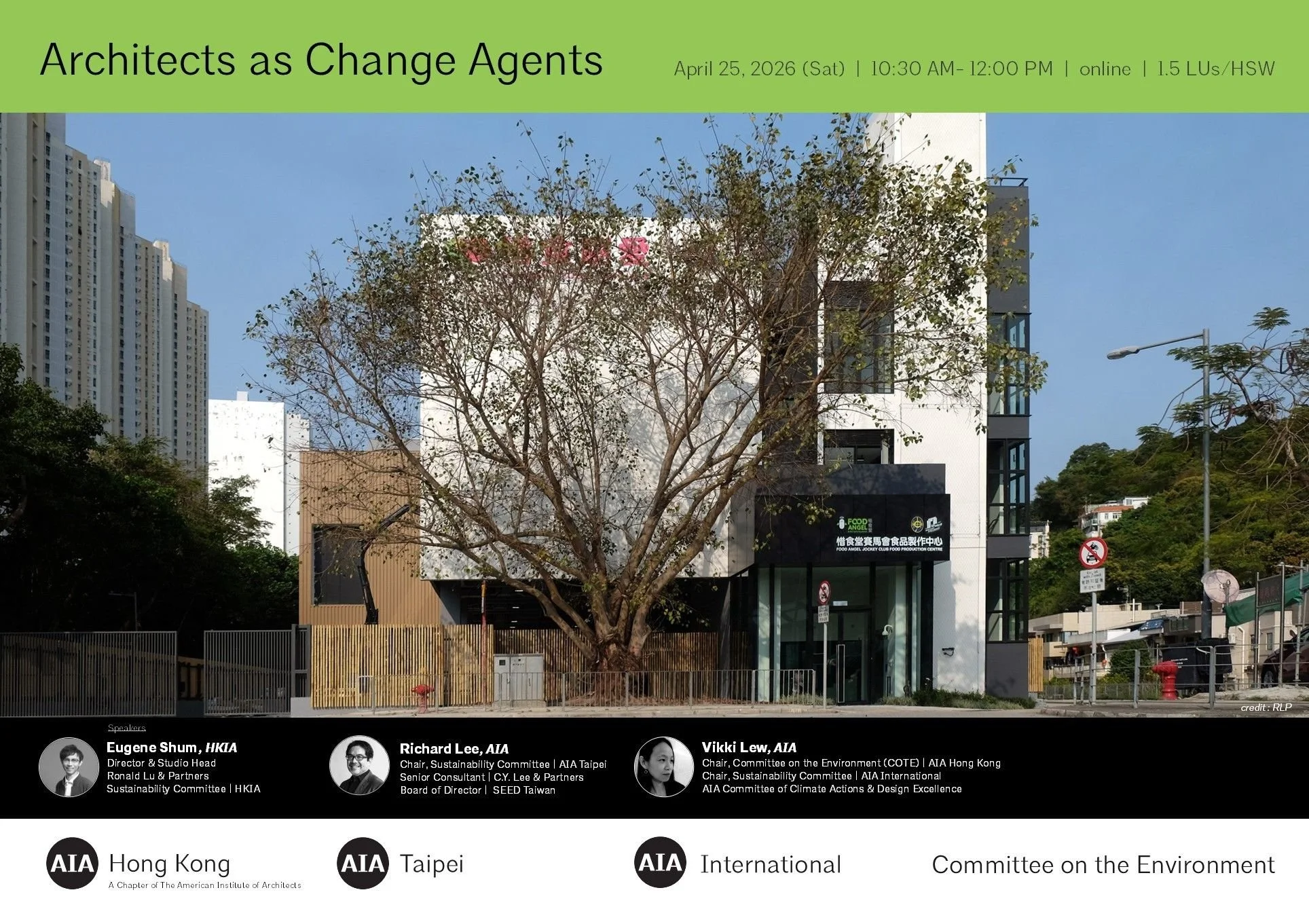
When: Friday 24 April 2026 @ 22:30 (Eastern US Time)/ Saturday 25 April 2026 @ 10:30 (Hong Kong time)
Where: Online
CES Credits - Estimated 1.5 LU/ HSW for AIA Members
Speakers
Eugene Shum, HKIA, Director & Studio Head Ronal Lu & Partners Sustainability Committee
Richard Lee, AIA, Sustainability Committee AIA Taipei, Senior Consultant C.Y. Lee & Partners, Board Director SEED Taiwan
Vikki Lew, AIA, Committee on the Environment AIA Hong Kong, Sustainability Committee AIA International, AIA Committee of Climate Action & Design Excellence (CCADE)
Description
Earth Day 2026 arrives at a critical moment for the built environment, as climate impacts intensify and social inequities deepen. This webinar will explore how the profession can meaningfully respond to climate change, the need for social equity, and the urgent matter of decarbonizing the built environment. The session will introduce key AIA climate initiatives, including The Framework for Design Excellence, the AIA 2030 Commitment, the Materials Pledge, and the Resilience Initiative—demonstrating how everyday design decisions can directly influence environmental performance, human health, and community well‑being.
Grounded in practice, the webinar will feature case studies that position architects as change agents who integrate sustainability and equity to achieve community benefit. One such project, the Food Angel Jockey Club Food Production Centre reimagined a Hong Kong industrial building as a socially and environmentally driven community kitchen supporting food recovery, public education, and climate‑resilient design – and received a 2025 AIA Hong Kong Honor Award in Architecture, as well as a Sustainability Award.
The program will also highlight regional policy leadership through a presentation of Taiwan’s new Net Zero Building Initiative and Green Façade Policy. This session will examine policy drivers, performance goals and design implications, with a focus on integrating energy efficiency, renewable systems, and vegetated façades to shape a low‑carbon, built environment.
Ultimately, this webinar will inspire architects and allied professionals to view climate action not as a constraint, but as a catalyst for better design. Learn how every project—regardless of scale, typology, or location—can advance environmental stewardship and social impact.