
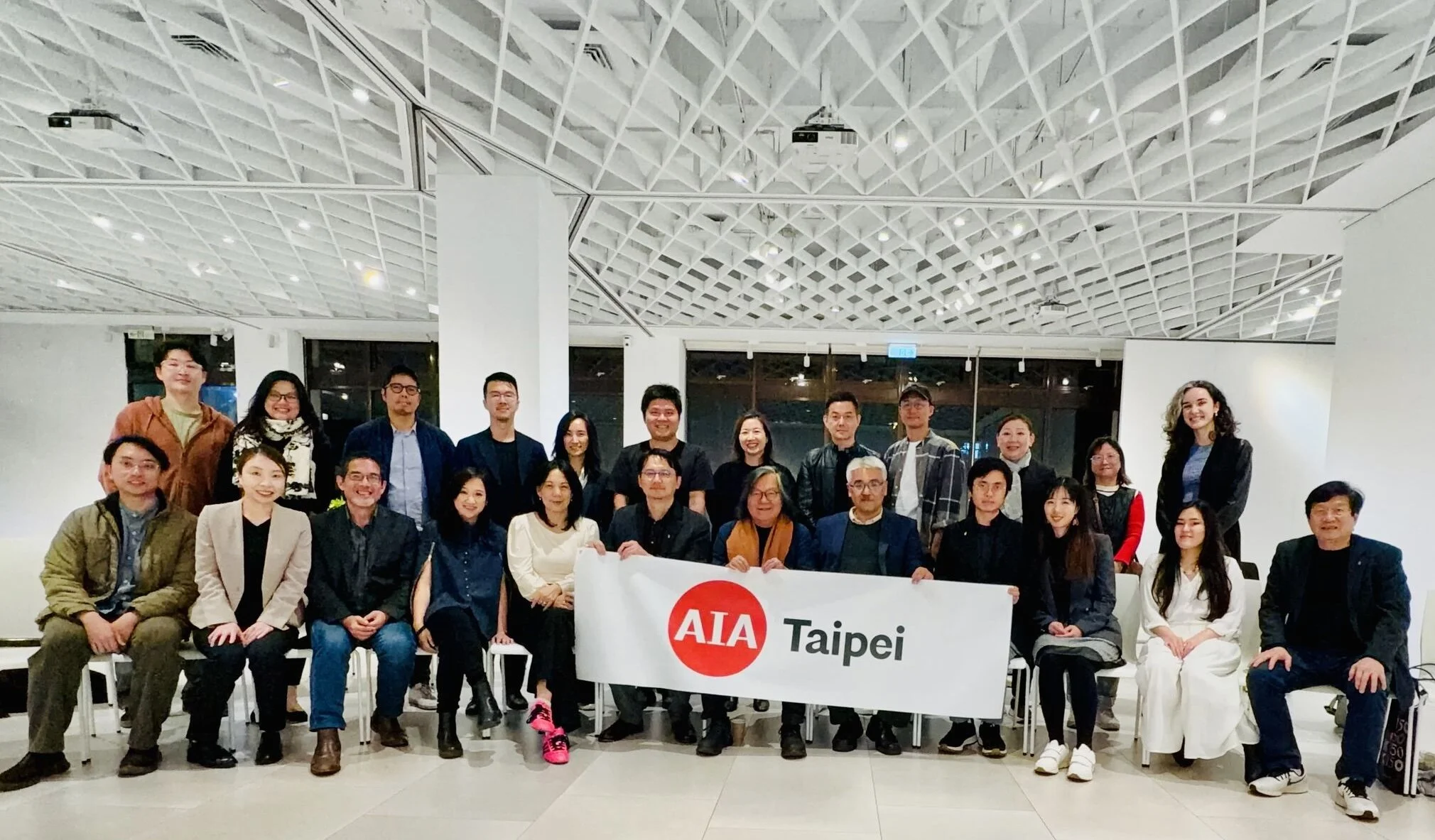
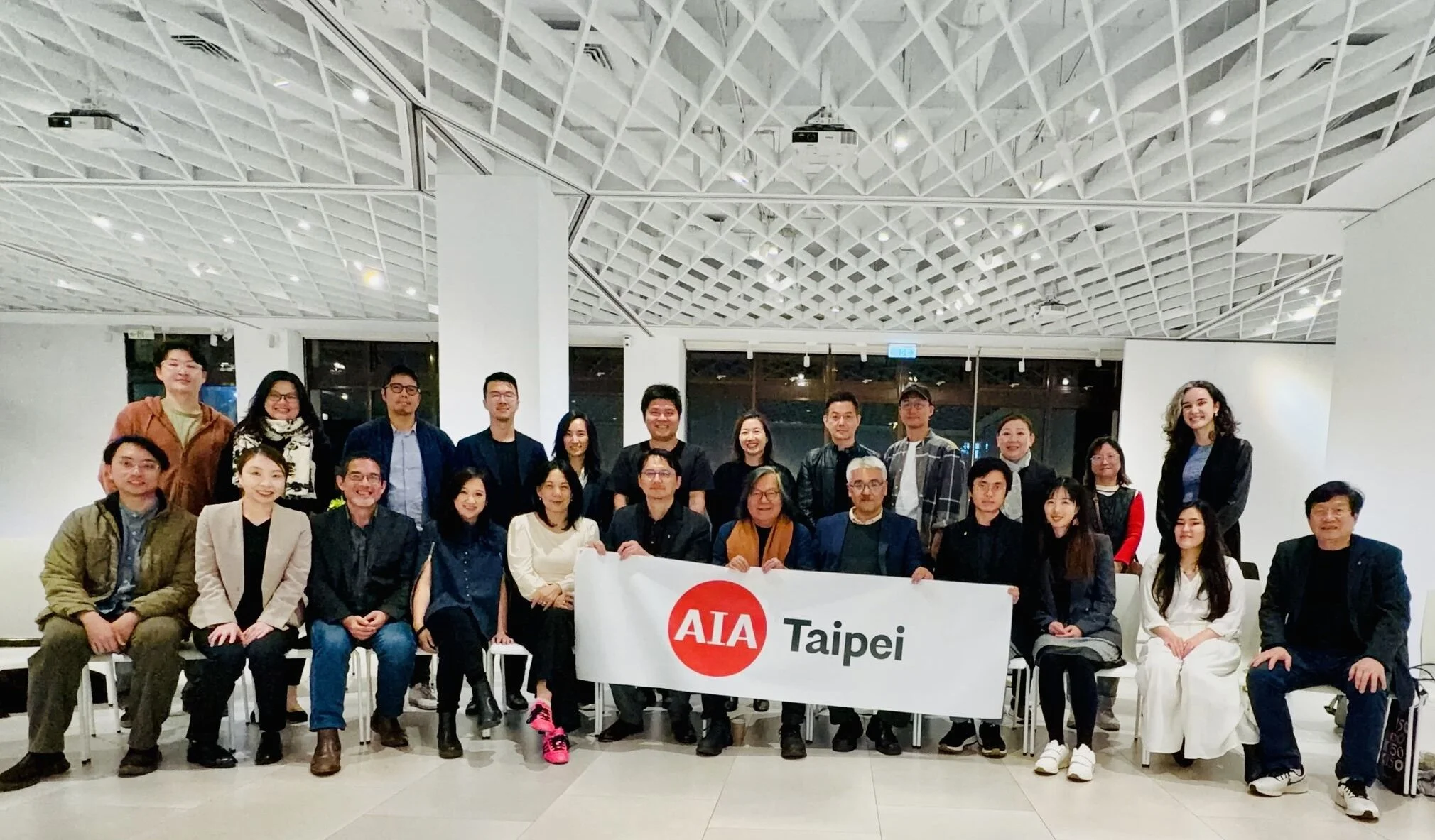
AIA Taipei members in 2025 Annual General Meeting
The recent approval of AIA Taipei as a full Chapter of the AIA marks an important milestone—not only for Taipei, but also in the continuing evolution of AIA International. It is worth looking briefly at how the path from Country Representative to Section and, ultimately, Chapter developed.
When I joined the board of the AIA International Region in 2015, the organization was barely two years old. At that time, six Chapters represented roughly two-thirds of the international membership, while more than 1,000 members were not connected to any Chapter or other formal AIA structure. Once the new Region had become established, it was clear that finding a meaningful way to engage these members needed to be a priority.
The first major step was the formation of a Chapter in Canada in 2017. With approximately 500 members concentrated largely in its major cities, Canada was the most obvious place to begin.
The greater challenge was how to serve the remaining members, dispersed across more than 100 countries. In 2019 we launched the Country Representative programme, initially in around twelve countries. The aim was simple: to begin building local communities through which AIA members could meet, exchange knowledge, network, and participate in continuing education. The programme has since grown to represent 35 countries outside the Chapter structure.
A further opportunity arose in 2020 when AIA National dissolved the regional structure and the AIA International Region became AIA International, a component of the AIA. The change allowed us to establish Sections—something that had not been possible under the former regional structure.
Sections offered a practical solution to an important problem. AIA Chapters are required to provide a defined range of Core Member Services (CMS), including continuing education, the dissemination of professional knowledge and best practice, and outreach to the wider community. Providing and administering these services requires significant organizational infrastructure—something that smaller or newly formed groups of international members could not reasonably be expected to create immediately.
We therefore developed the international Section model on the basis that AIA International would provide the administrative framework and Core Member Services, while local teams could concentrate on what mattered most on the ground: engaging members, organizing seminars and lectures, providing continuing education, developing partnerships, and creating local and regional programmes.
Working with AIA National, we established a template specifically for international Sections. One important principle was that, as an American professional organization operating in another country, the AIA is effectively a guest. Building relationships with local professional and educational organizations was therefore integral to the model, allowing Sections to work collaboratively and create mutual benefit.
This framework led to the establishment of the first five Sections of AIA International: AIA Latin America, AIA Southeast Asia, AIA South Korea, AIA Sub-Saharan Africa, and AIA Taipei. AIA Oceania followed, and several additional Sections are now in development.
From the outset, AIA Taipei had a particularly active and engaged membership. It also had the critical mass of US-licensed AIA members necessary to contemplate becoming a Chapter. The Taipei team therefore began exploring the next stage in its development.
The principal distinction between a Section and a Chapter is organizational and financial responsibility. A Section operates under AIA International, which provides the administrative and financial structure and Core Member Services. A Chapter assumes those responsibilities itself.
To create a clear route between the two, we worked with AIA National to develop a framework through which an established Section could demonstrate its readiness to become a Chapter. Core Member Services formed the basis of that framework.
The Section structure is particularly valuable because it allows a local organization to develop gradually. It takes time to establish leadership, committees, programmes, partnerships, and effective ways of engaging members. Once those systems are firmly established, however, they provide much of the institutional foundation required for a Chapter.
There are additional challenges internationally. A new Chapter must establish an appropriate legal entity within its own country, rather than operating under the corporate umbrella of AIA International. Legal requirements differ considerably between jurisdictions, making this substantially more complex than forming a domestic US Chapter.
The Chapter must also assume responsibility for its own finances, including banking, taxation, and the appropriate corporate and financial structure. These are significant steps and require both time and sustained commitment from the local leadership.
AIA Taipei spent several years developing the organizational, legal, and financial framework required for its application. That work culminated in the formal approval of AIA Taipei as a Chapter of the AIA in September 2026.
This is a significant achievement for the Taipei team and an important validation of the pathway that has developed from Country Representatives, through Sections, to Chapters.
Congratulations to everyone at AIA Taipei. We look forward to seeing other AIA International Sections follow the path they have established.
* * *
Lester Korzilius
FAIA, RIBA