
ARCHITECTURE DURING ART: LAUFEN CONVENES A CONVERSATION ON TIME, LONGEVITY AND THE FUTURE OF DESIGN
At Art Basel, designers, curators and cultural thinkers gather to explore how design can create lasting value and remain relevant in an age of constant acceleration.
What does design aspire to in an age defined by technological acceleration and constant change? What enables projects, objects and ideas to endure over time? What does longevity mean when creative tools evolve at an unprecedented pace? And how can architecture and design continue to create enduring cultural value over time?
These questions shaped “When Time Becomes Material,” a conversation presented as part of Architecture During Art, LAUFEN’s symposium held during Art Basel. The event took place within the Basel Social Club, the experimental platform that each year transforms an unexpected urban setting into a meeting ground for contemporary art, culture and new audiences. For its 2026 edition, Basel Social Club occupied a striking modernist office building designed by Swiss architects Diener & Diener, providing a fitting backdrop for a discussion centred on permanence, transformation and the passage of time.
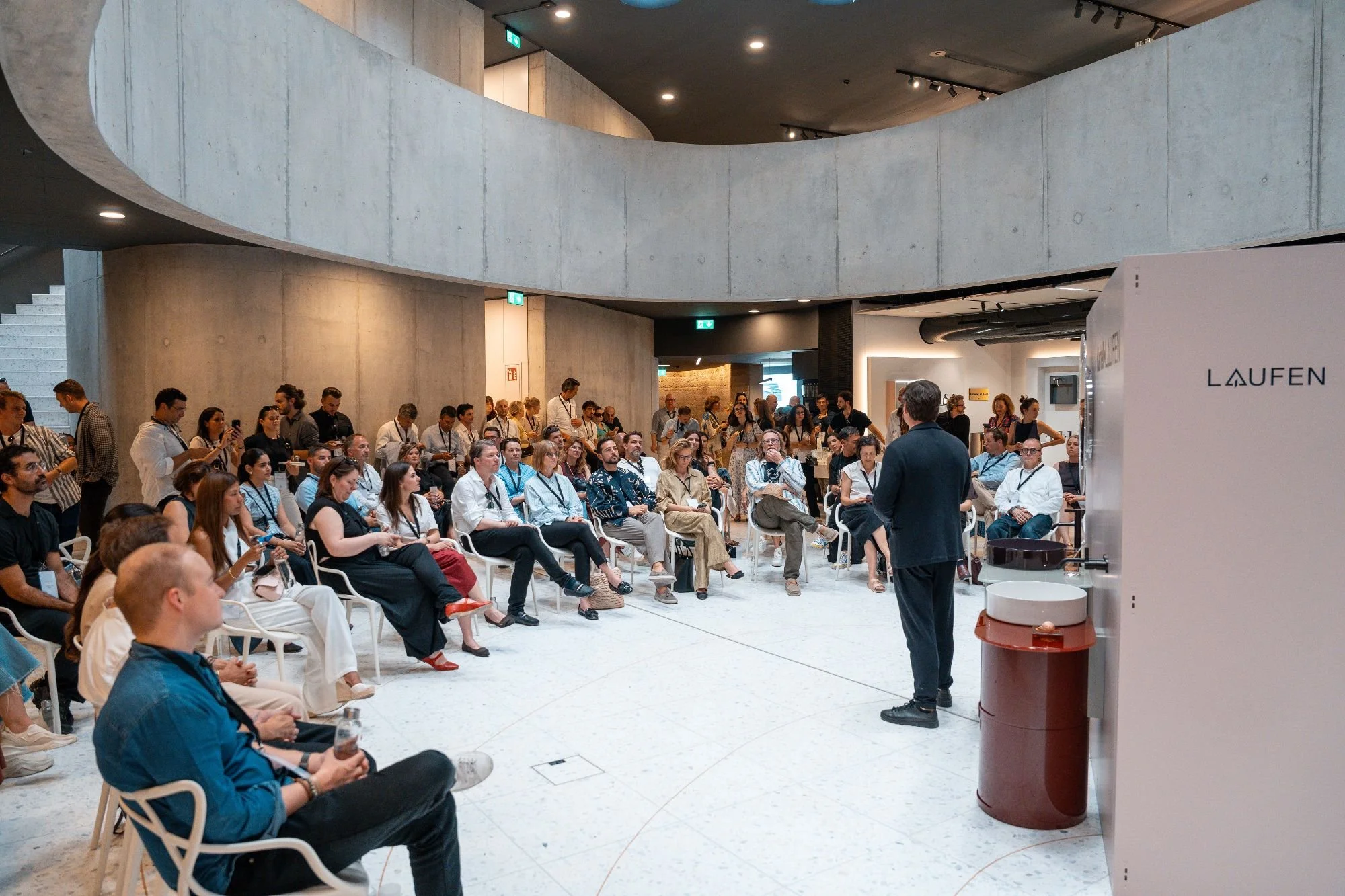
Conceived as an open exchange among some of today’s most influential creative voices, the panel brought together Mike Meiré, designer and creative director of Meiré und Meiré; Gabriele Chiave, designer and co-founder of Controvento; Chus Martínez, curator, writer and art theorist; and it was moderated by curator Christian Herren. Together, they explored how design can continue to create meaning, value and cultural resonance in an era increasingly defined by uncertainty and accelerated change.
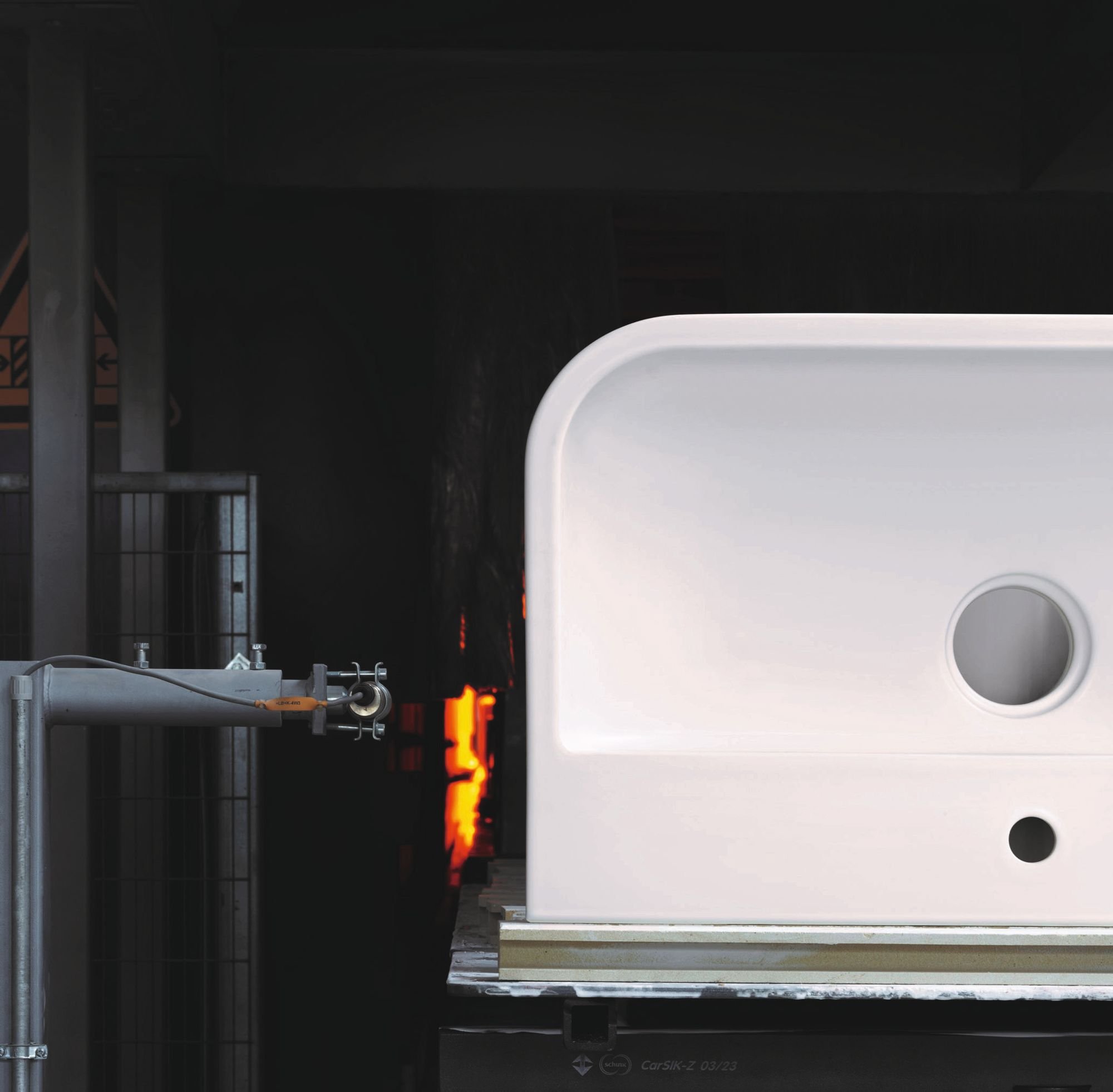
The discussion took its cue from “When Time Becomes Material”, the installation conceived by Konstantin Grcic for LAUFEN during Milan Design Week 2026 and presented again at Basel Social Club. More than an installation, the project functions as an experiential environment that invites visitors to perceive time not as something abstract, but as a tangible presence—one that reveals itself through the objects, gestures and rituals that structure everyday life.
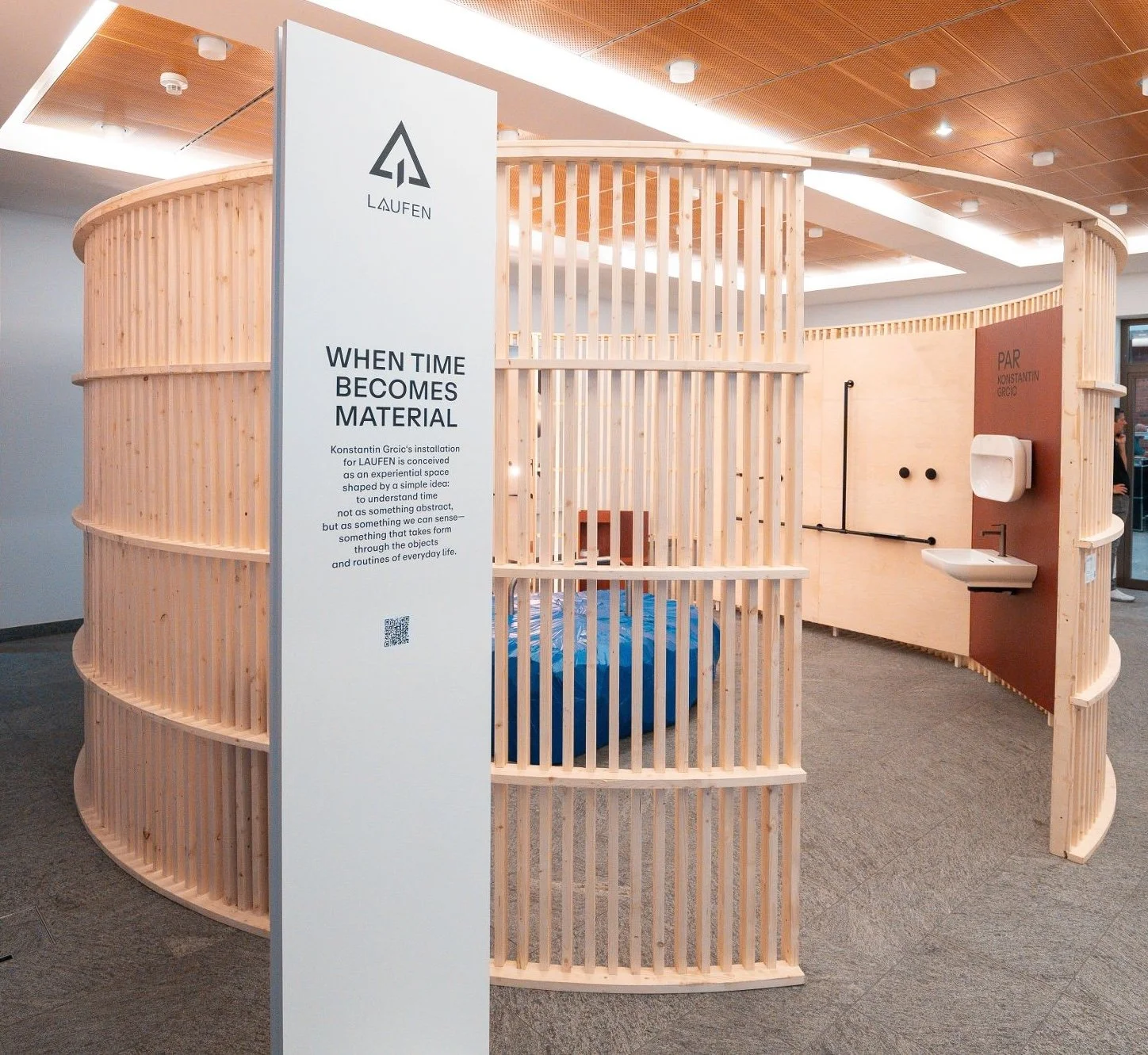
At the heart of the conversation was a theme that has become increasingly urgent across the design disciplines: how projects, objects and spaces can endure and remain relevant over time. For LAUFEN, longevity extends far beyond material durability. It encompasses cultural relevance, adaptability and the capacity of design to evolve alongside the societies it serves. In a landscape shaped by technological innovation, shifting values and new modes of living, longevity depends not only on how long a product lasts, but on its ability to retain meaning, adapt to change and continue serving human needs over time.
The speakers offered complementary perspectives on the role of time as a design material in its own right. Their reflections addressed the challenge of creating lasting value beyond cycles of consumption and obsolescence, while also considering how emerging technologies—from artificial intelligence to advanced digital tools—can be embraced without compromising the human dimension of creativity. Rather than viewing longevity as a fixed attribute, the discussion proposed a more dynamic understanding: longevity as the capacity to adapt, evolve and remain culturally relevant across generations. A quality that applies equally to products, architecture, ideas and institutions.
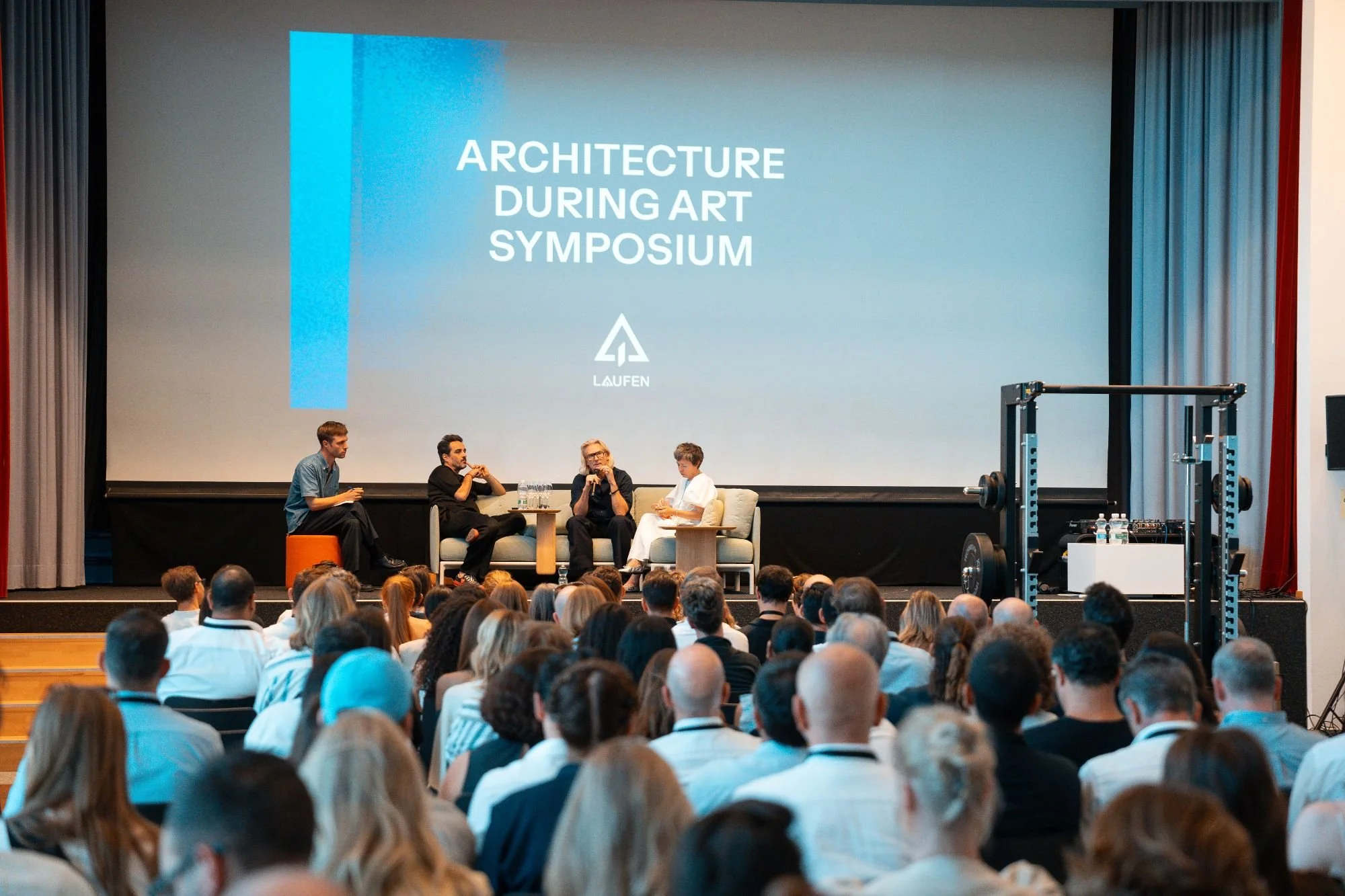
With Architecture During Art, LAUFEN continues to expand the boundaries of design discourse, positioning itself not only as a manufacturer of enduring products but also as a platform for cultural exchange. By bringing together designers, curators and thinkers from across disciplines, the symposium underscores the importance of viewing design as more than a response to present-day needs. It is a practice capable of imagining futures, shaping narratives and creating forms of value, meaning and beauty that stand the test of time.
Mónica García
Corporate PR and Communications Manager, LAUFEN Bathrooms AG